
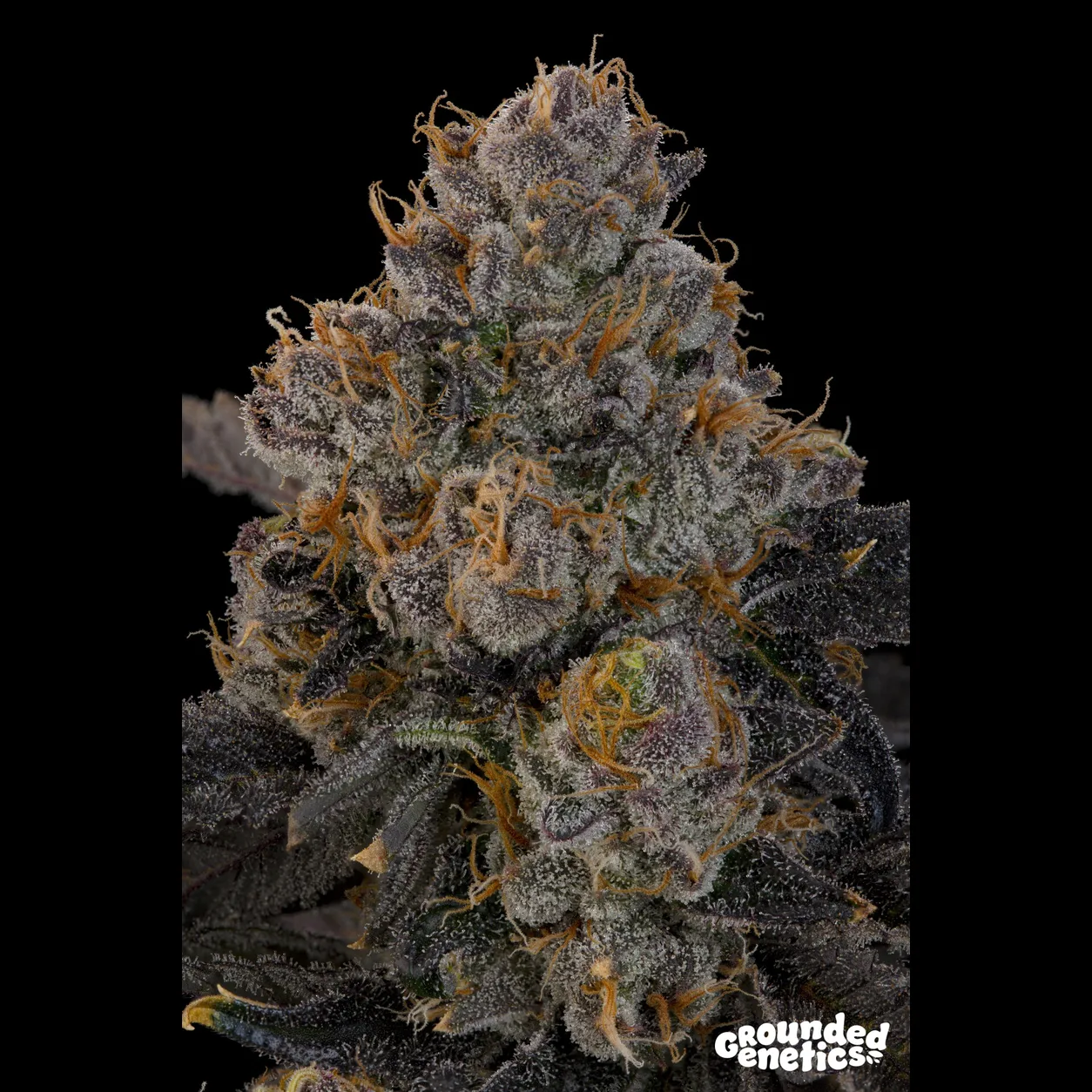
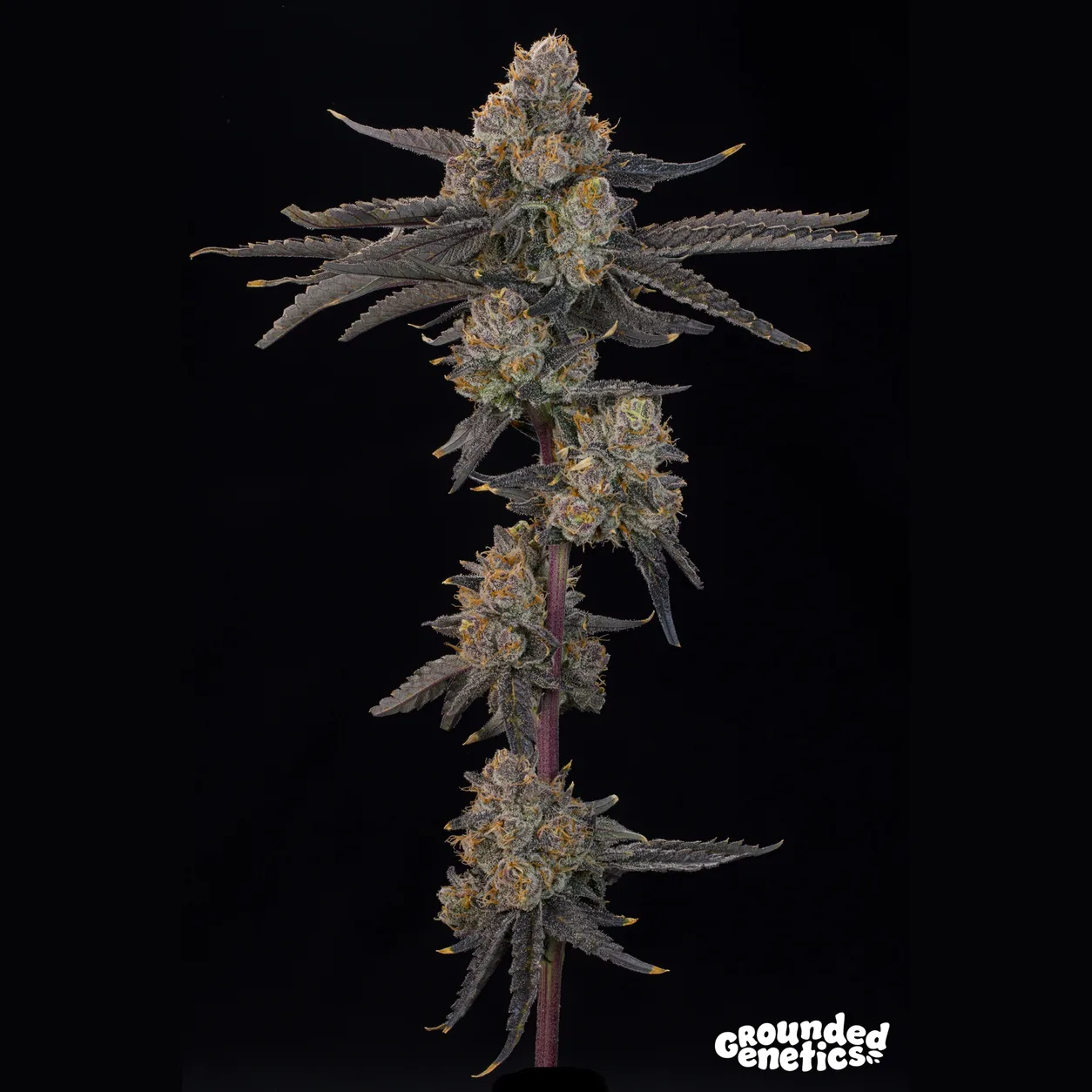
Blue Honey takes Grounded Genetics’ celebrated hash queen, Pink Honey, and pairs her with one of their heavyweight flower staples, the Blucci. Pink Honey, a ((Papaya x GMO) x Ozark) creation, has earned a strong reputation among solventless makers for her hash and rosin, and for a sweet, almost artificial, bubblegum-like fruit profile that is hard to mistake for anything else.
There was one catch: Pink Honey phenotypes that translated well as smokable flower were few and far between. Wanting to enjoy those terps in the jar as well as the press, Grounded Genetics dusted her with reversed Blucci pollen, a line built from Blue Sherb and Jealousy genetics and then strengthened with RS11 for production.
According to the breeder, the progeny delivered exactly what they were hoping for: improved yields, coloration, trichome density and flower structure, with a higher share of flower-geared phenotypes while still keeping a number of strong washers in the mix. Blue Honey is sold as a feminized photoperiod line.
Sweet Pink Honey Terps with Candy Gas
Flavor-wise, expect blends of that distinct, sugary Pink Honey profile layered with candy gas. The bubblegum and sweet fruit character comes from the mother, while Blucci adds a sherbet-candy dimension and a touch more depth. The balance between the two shifts from plant to plant, so some phenotypes lean sweeter and others carry more of the gassy back end.
The breeder does not list effects, but the lineage gives a reasonable guide. With GMO and Ozark in the background of Pink Honey and Sherb genetics in Blucci, Blue Honey is expected to lean toward a heavier, relaxing experience: a pleasant, mood-lifting start followed by settled body ease. It is likely a better fit for the evening than for a busy afternoon.
Growing Blue Honey for Flower or Hash
Blue Honey is a cross with two possible goals. If flower is the priority, look for plants with tighter structure and stronger color, which are traits Blucci was brought in to improve. If washing is the plan, watch for the stickier, greasier plants that echo Pink Honey’s hash reputation, and confirm them with a small test wash before committing.
Indoors, topping and LST help these plants fill a tent evenly. Keep airflow strong as the flowers stack up, and avoid letting late-bloom humidity creep up around the denser colas. Careful drying and a slow cure help preserve the delicate sweet notes that make the Pink Honey side so appealing.
Blue Honey Characteristics
| Strain type | Feminized photoperiod |
| Genetics | Pink Honey x Blucci |
| THC | High (no lab figure published by the breeder) |
| Effect | Expected to lean relaxing: mood lift followed by body ease |
| Flavor | Sweet bubblegum-like fruit with candy gas layers |
| Aroma | Sugary, almost artificial fruit candy with a gassy undertone |
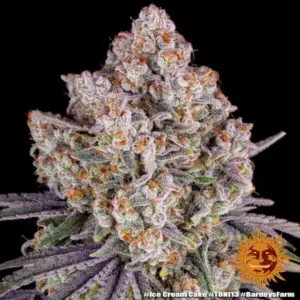
| Bud appearance | Improved structure, coloration and trichome density over Pink Honey |
| Yield | Improved over Pink Honey according to the breeder |
| Best cultivation technique | Topping and LST; select phenotypes for flower or washing |
| Seed pack | 7 feminized seeds |
FAQ
What is Blue Honey a cross of?
Blue Honey is Pink Honey, a ((Papaya x GMO) x Ozark) hash favorite, pollinated with reversed Blucci from Grounded Genetics.
Why did Grounded Genetics add Blucci to Pink Honey?
Pink Honey rarely produced phenotypes that worked well as flower. Blucci was used to improve yield, color, trichome density and structure, and to raise the share of flower-friendly phenotypes.
Can Blue Honey still be used for hash?
Yes. The breeder notes that the progeny still includes a number of washer phenotypes alongside the flower-geared ones.
What does Blue Honey taste like?
Expect the sweet, almost artificial, bubblegum-like fruit of Pink Honey blended with candy gas layers. The balance varies by phenotype.
What effects should I expect?
No official effect profile is published. Given its GMO, Ozark and Sherb heritage, it is expected to lean toward a relaxing, evening-friendly experience.
How many seeds are in a Blue Honey pack?
Each pack contains 7 feminized photoperiod seeds from Grounded Genetics.

Reviews
There are no reviews yet.