
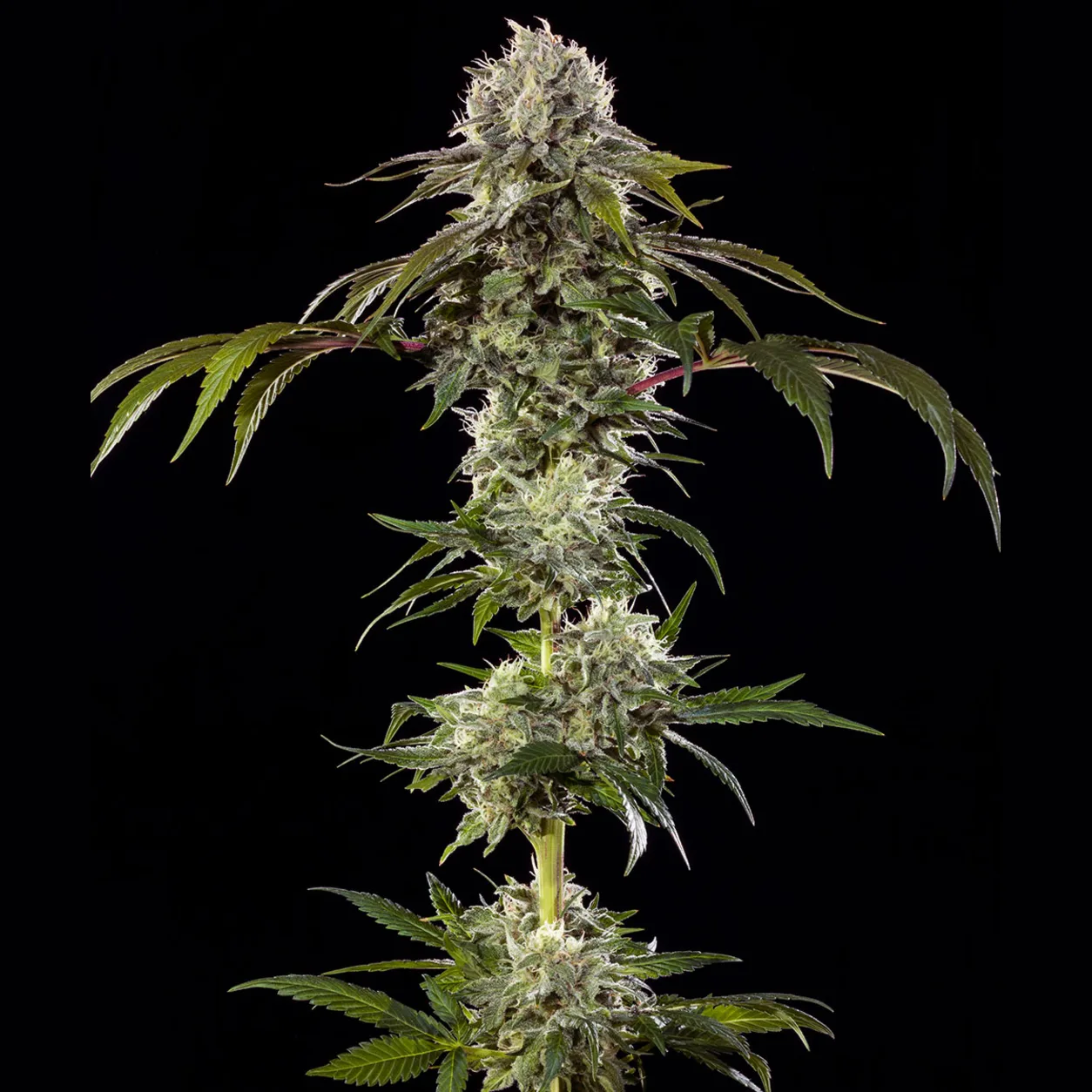
Durban Poison F1 is Barney’s Farm’s take on the legendary South African sativa, refined for modern growers. Built on South African landrace genetics and rated 100% sativa, it delivers THC around 27% with sweet pine, spicy anise and earthy notes, plus the clear, motivating high the name is known for.
As part of the Precision F1 Hybrids line, Durban Poison F1 is produced as a first-generation cross of stable parent lines. That approach preserves the landrace character while adding the uniformity and hybrid vigor of F1 breeding: plants grow evenly, finish together and push out more yield than a typical variable landrace.
Indoors, plants stretch to 150–200 cm (59–79 in) and yield up to 600 g/m² (1.97 oz/ft²) after 56–65 days of bloom, fast for a pure sativa. Outdoors they can tower at 200–350 cm (79–138 in) and produce up to 700 g/plant (24.7 oz/plant), ready in the first to second week of October.
South African Landrace Lineage and the F1 Advantage
Durban Poison traces its roots to the port city of Durban and the surrounding region of South Africa, where sativa plants were grown in warm, coastal conditions. The strain became a classic thanks to its energetic effect and its unusual anise and licorice aroma. Barney’s Farm lists the genetics simply as South African landrace and has worked the line into its F1 program.
The pure sativa build is obvious: tall, stretching plants with long internodes, an airy structure that light passes through easily, and narrow, finger-like leaflets. Colas grow long and spear-shaped, bright lime green with auburn pistils, and resin production is generous for a sativa, so the buds shimmer by harvest.
These are feminized photoperiod seeds, so the plants are female and flowering begins when the lights are set to 12/12. To keep the same F1 uniformity and vigor, start each new run from fresh seed rather than from seeds made off the crop.
Aroma, Flavor and Effect
The scent is instantly recognizable: sweet anise and licorice lead, layered with fresh pine and earthy spice, while bright citrus highlights add contrast. Cracking a bud releases more herbal and woody complexity.
The flavor starts with sweet licorice and spicy anise, almost candy-like, then moves into pine and earthy herbs. Citrus and a peppery tickle show up mid-session, and the finish returns to sweet pine with a lingering anise note.
Barney’s Farm describes the effect as uplifting, energetic and creative. It hits fast in the head, bringing mental clarity and fresh ideas with very little body weight. A classic daytime strain for creative projects, outdoor adventures or social plans.
Growing Durban Poison F1 Indoors and Outdoors
Indoors, plan for height: plants reach 150–200 cm (59–79 in). Supercropping, LST and selective pruning keep vertical growth in check and encourage a wider canopy. Flip to 12/12 early, before plants fill the space, to leave room for the flowering stretch. Bloom takes 56–65 days and yields reach up to 600 g/m² (1.97 oz/ft²).
Outdoors, Durban Poison F1 is in its element. In full sun, plants can reach 200–350 cm (79–138 in) and produce up to 700 g/plant (24.7 oz/plant), finishing in the first to second week of October in the Northern Hemisphere. The open structure dries quickly after rain, which helps against mold.
Barney’s Farm notes strong nutrient efficiency and good hardiness across a range of climates, so this F1 adapts well to different growing styles as long as it has room to stretch.
Durban Poison F1 Characteristics
| Strain type | Feminized photoperiod, Precision F1 Hybrid |
| Genetics | South African Landrace |
| Indica/Sativa | 100% Sativa |
| THC | 27% |
| Effect | Uplifting, energetic, creative |
| Flavor | Sweet, pine, spicy |
| Aroma | Sweet, pine, earthy |
| Indoor yield | Up to 600 g/m² (1.97 oz/ft²) |
| Outdoor yield | Up to 700 g/plant (24.7 oz/plant) |
| Flowering time | 56–65 days |
| Outdoor harvest | 1st–2nd week of October |
| Height | Indoor 150–200 cm (59–79 in) / Outdoor 200–350 cm (79–138 in) |
| Best cultivation technique | Supercropping, LST and pruning |
FAQ
Why is Durban Poison F1 called an F1?
It belongs to Barney’s Farm’s Precision F1 Hybrids line, produced as a first-generation cross of stable parent lines. That keeps the South African landrace character while adding uniformity and hybrid vigor.
Is Durban Poison F1 feminized?
Yes. It is a feminized photoperiod strain that begins flowering when the lights switch to 12/12.
Is Durban Poison F1 a pure sativa?
Yes. Barney’s Farm rates it 100% sativa, built on South African landrace genetics.
How long does Durban Poison F1 flower?
Indoors, 56–65 days. Outdoors, harvest comes in the first to second week of October.
How tall does Durban Poison F1 grow?
Indoors, 150–200 cm (59–79 in). Outdoors, it can reach 200–350 cm (79–138 in), so training is recommended in tents.
What does Durban Poison F1 taste like?
Sweet licorice and anise lead, followed by pine, earthy herbs and a light citrus and pepper finish.


Reviews
There are no reviews yet.