
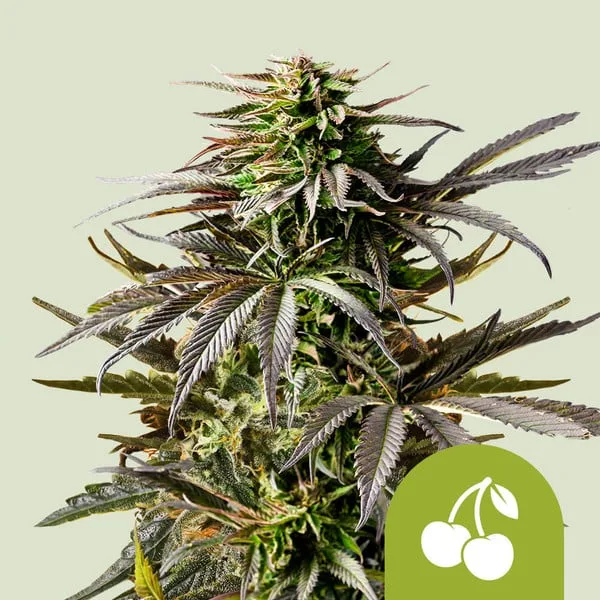
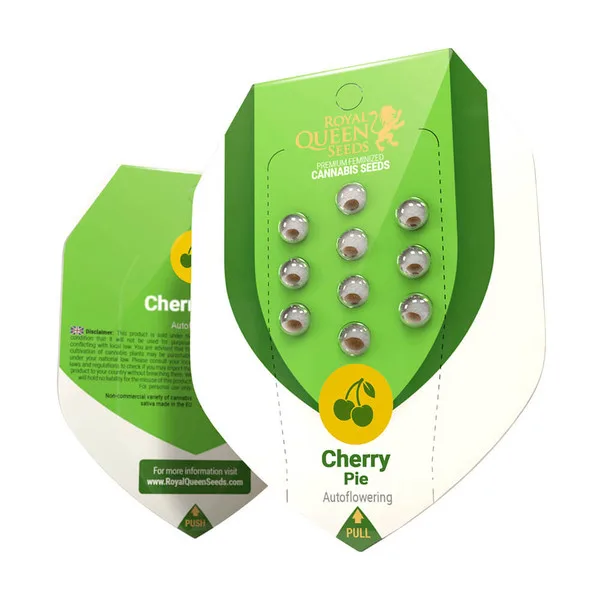
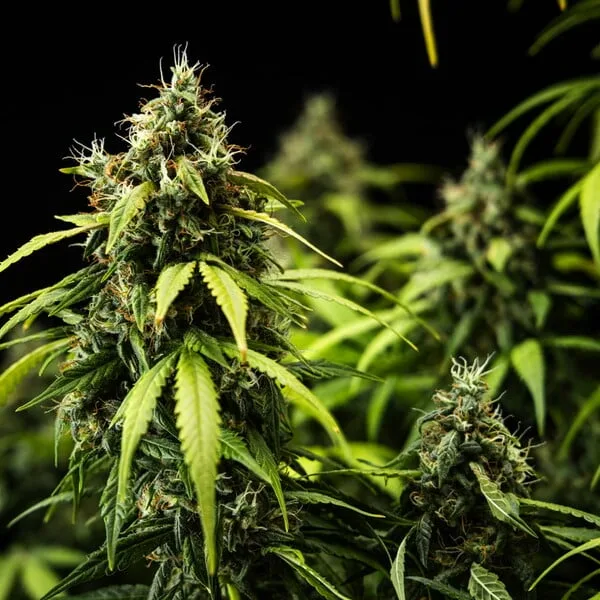
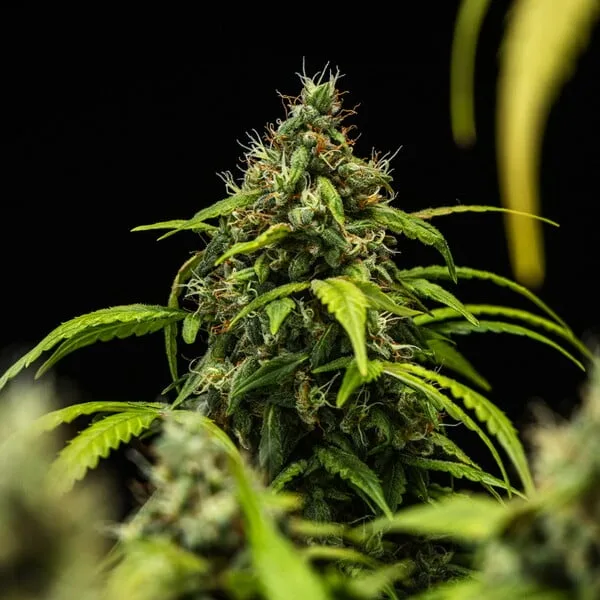
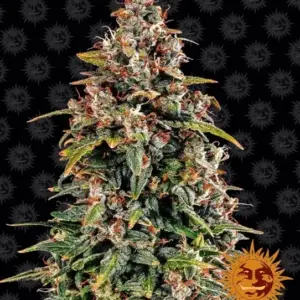
Cherry Pie Auto takes the fruit-forward flavor of the original Cherry Pie and puts it on an autopilot timer. Royal Queen Seeds crossed Cherry Pie with Granddaddy Purple Auto, adding ruderalis genetics that let the plant flower on its own, no matter how many hours of light it gets. There is no 12/12 switch to manage and no waiting for the days to shorten.
The heritage traces back to Granddaddy Purple and Durban Poison, two strains from opposite ends of the indica-sativa scale. The auto version lands at 65% indica, 30% sativa and 5% ruderalis, which shows in her dense buds and in a high that balances head and body.
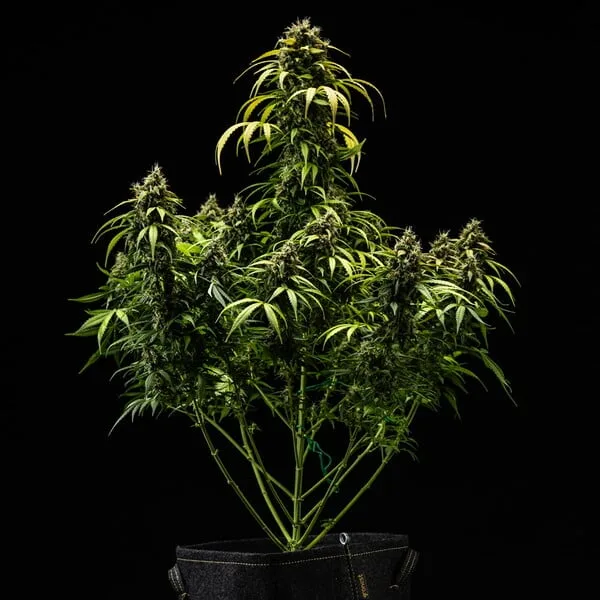
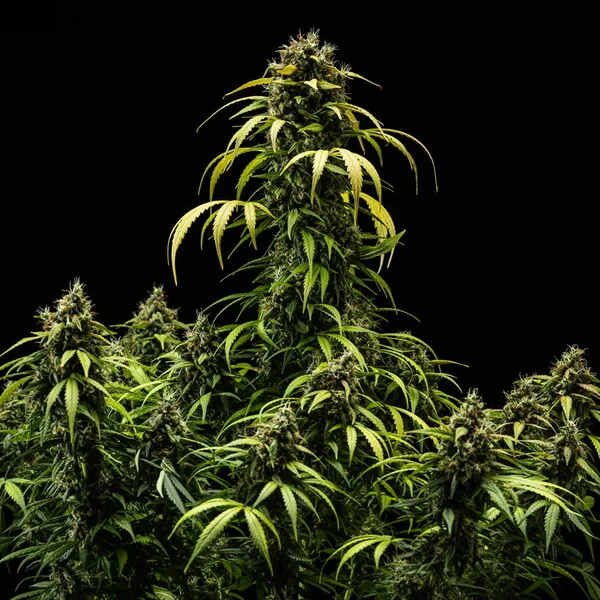
From germination to harvest, Cherry Pie Auto needs only 65 to 70 days, about 9 to 10 weeks. Indoors she reaches 2 to 3 feet (60–90 cm) and yields 14 to 16 oz/m² (395–455 g/m²). Outdoors she can grow to 4 to 5 feet (120–150 cm) and return 3 to 6 oz/plant (85–170 g/plant).
Flavor and Effects of Cherry Pie Auto
The terpene profile is pure fruit stand. Expect blueberry and mixed berries with a candy-shop sweetness that comes through clearly on both the inhale and exhale. It is a bright, cheerful flavor that suits joints and vaporizers alike.
With up to 19% THC, the effect is firm but approachable. The Durban Poison side delivers a clean, mentally uplifting lift, while Granddaddy Purple adds a relaxed, heavy-limbed comfort. The combination makes Cherry Pie Auto flexible: a few hits in the afternoon brighten the mood, while a bigger session in the evening helps the day wind down.
Growing Cherry Pie Auto: Why Autoflowers Make Life Easy
Autoflowering plants follow their own internal clock, so you can run them under 18/6 or 20/4 lighting from start to finish. That saves time and electricity tuning schedules and lets you grow autos next to photoperiods in vegetative growth. Cherry Pie Auto grows relatively large for an auto, which is where her strong yields come from.
Start seeds in their final containers to avoid transplant stress, and use gentle LST in weeks two to four to open the canopy. Avoid heavy topping on autos, since there is little time to recover. Outdoors, Royal Queen Seeds rates her for long summers; with a 9 to 10 week cycle, many gardeners can fit two or even three harvests into one season by staggering sowings from spring through midsummer.
Her compact size also makes her a natural fit for balconies, patios and small tents where a tall photoperiod would quickly outgrow the space.
Cherry Pie Auto Characteristics
| Strain type | Autoflowering (feminized) |
| Genetics | Cherry Pie x Granddaddy Purple Auto |
| Indica/Sativa | 65% Indica / 30% Sativa / 5% Ruderalis |
| THC | Up to 19% |
| CBD | Low |
| Effect | Balanced, physically relaxing, uplifting |
| Flavor | Blueberry, candy, fruity |
| Indoor yield | 14 to 16 oz/m² (395–455 g/m²) |
| Outdoor yield | 3 to 6 oz/plant (85–170 g/plant) |
| Seed to harvest | 65–70 days from germination (about 9–10 weeks) |
| Height | Indoors 2 to 3 feet (60–90 cm); outdoors 4 to 5 feet (120–150 cm) |
| Climate | Suited to regions with long summers |
| Best cultivation technique | Gentle LST, no transplanting, 18/6 or 20/4 light |
FAQ
How long does Cherry Pie Auto take from seed to harvest?
About 65 to 70 days after germination, roughly 9 to 10 weeks in total.
Do I need to change the light schedule for Cherry Pie Auto?
No. As an autoflower she starts blooming on her own. Most growers run 18/6 or 20/4 from seed to harvest.
How big does Cherry Pie Auto get?
Indoors she reaches 2 to 3 feet (60–90 cm), and outdoors 4 to 5 feet (120–150 cm), which is fairly large for an auto.
What yield does Cherry Pie Auto produce?
Royal Queen Seeds lists 14 to 16 oz/m² (395–455 g/m²) indoors and 3 to 6 oz/plant (85–170 g/plant) outdoors.
How does Cherry Pie Auto differ from the original Cherry Pie?
The auto adds ruderalis genetics, so it flowers automatically and finishes 65 to 70 days from seed. THC is up to 19% versus up to 20% for the photoperiod, and the flavor leans more toward candy and blueberry.
Can I get more than one outdoor harvest per year?
Yes. Thanks to the short cycle, staggered sowings from spring to midsummer can produce several harvests in a long season.

Reviews
There are no reviews yet.