
Table of Contents
Growing cannabis successfully starts right from the beginning with strong, healthy seedlings. The early stages of a plant’s life are the most critical, and providing proper care during this period lays the foundation for vigorous growth, solid yields, and potent buds.
In this guide, we’re going to break down how to care for young cannabis seedlings, covering essential factors such as light, watering, temperature, and nutrients.
So, without further delay, let’s get into the best ways to properly care for young cannabis seedlings.
Understanding the Seedling Stage
The seedling stage begins once a cannabis seed has germinated and its first leaves, known as cotyledons, emerge. Generally speaking, this stage lasts about two to three weeks, during which the plant develops its first sets of true leaves.
This stage is delicate, and even small mistakes can stunt growth or lead to plant loss. That’s why it’s especially important to pay close attention to environmental conditions to ensure strong, healthy seedlings that are ready for the vegetative stage.
Providing the Right Lighting
Young cannabis seedlings need adequate light, but too much intensity can cause damage. If you’re using grow lights, CFLs, LEDs, or fluorescent T5 tubes are solid options, as they provide a gentle light spectrum that works well for seedlings. Position lights about 30–40 cm above the seedlings and lower them gradually as the plants grow.
Natural sunlight is also an option when growing outdoors, but make sure seedlings receive at least 16 hours of light per day. If they start looking stretched or leggy, that’s usually a sign they’re not getting enough light.
Controlling Temperature and Humidity
Cannabis seedlings do best in warm, humid conditions. Aim for daytime temperatures between 20–25°C, with slightly cooler temperatures at night. Sudden temperature drops or excessive heat can stress young plants, leading to slow growth or leaf curl, so it’s best to avoid extremes.
Humidity levels should stay around 60–70% to support healthy root and leaf development. A humidity dome can help maintain these levels, especially in drier environments. As seedlings mature, gradually reduce humidity to around 50%.
Watering Seedlings Properly
Overwatering is one of the most common mistakes when caring for young cannabis plants. Seedlings have small root systems and don’t need large amounts of water. Too much moisture can cause root rot, while too little can lead to wilting and slow growth, so finding the right balance is key.
To water correctly:
Use a spray bottle or small amounts of water to keep the soil moist but not saturated.
Allow the top layer of soil to dry slightly before watering again.
Make sure your pots have proper drainage to prevent water buildup.
If you’re growing in soil, choose a light, well-aerated mix that holds moisture without becoming too compact.
Choosing the Right Growing Medium
The right growing medium plays a major role in seedling development. Light, airy soils rich in organic matter are ideal. Pre-mixed cannabis-friendly soils often contain beneficial microbes and nutrients that support early growth.
For hydroponic or coco coir setups, maintaining a balanced pH is essential. Cannabis seedlings generally prefer a pH range of 5.8–6.5, which helps ensure nutrients are readily available.
Nutrient Requirements for Seedlings
Cannabis seedlings need very little supplemental nutrition during their first few weeks. If you’re using pre-fertilized soil, additional feeding isn’t necessary at this stage. Overfeeding can cause nutrient burn, leading to yellowing or curled leaves.
If you’re growing in an inert medium like coco coir, start with a very diluted nutrient solution at quarter strength and increase gradually as the plant grows. Look for formulas higher in nitrogen and lower in phosphorus and potassium, as nitrogen supports healthy leaf development.
Providing Proper Airflow and Ventilation
Good airflow helps prevent problems like damping-off disease, which can kill young seedlings. Placing a small oscillating fan near the plants helps strengthen stems and improve air circulation. Make sure your grow space is well ventilated to avoid stagnant, humid air that can attract pests and mold.
Recognising and Preventing Common Seedling Problems
Stretching
If seedlings are growing tall and thin, they’re likely not getting enough light. Move your grow light closer or increase light intensity to encourage more compact growth.
Yellowing Leaves
This can be caused by overwatering, nutrient deficiencies, or poor drainage. Check soil moisture levels and adjust watering as needed. If you’re growing in an inert medium, make sure your seedlings receive a mild nutrient solution.
Slow Growth
If your seedlings look stunted, review environmental factors such as temperature, humidity, and light exposure. Avoid transplanting too early, as young roots are still delicate.
Damping-Off
This fungal disease affects young cannabis seedlings and is often caused by excess moisture and poor airflow. To prevent damping-off, use sterile soil, avoid overwatering, and ensure proper ventilation.
When to Transplant Your Seedlings
Transplanting should only be done once the seedling has developed a strong root system and at least three to five sets of true leaves. Moving plants too early can cause transplant shock, which slows growth and may cause additional damage.
When transplanting:
Choose a slightly larger pot with good drainage.
Handle the root system gently to avoid damage.
Water lightly after transplanting to help the plant settle into its new environment.
Hardening Off Seedlings for Stronger Growth
If you’re planning to grow cannabis outdoors, it’s essential to harden seedlings off before transplanting them permanently.
Hardening off is the process of gradually exposing seedlings to outdoor conditions to reduce stress. Sudden changes in temperature, humidity, or light intensity can stunt growth or even kill young plants.
To harden off cannabis seedlings, start by placing them outside in a shaded, sheltered area for one to two hours per day. Over 7–10 days, gradually increase outdoor exposure and introduce more direct sunlight. Keep temperatures above 15°C, since sudden cold can slow growth.
Wind exposure also matters — using a small fan near seedlings before moving them outdoors can help strengthen stems. By the end of the hardening-off process, plants should be well adjusted and ready to thrive in their final growing environment.
Recognising Healthy As Opposed to Unhealthy Seedling Development
Being able to tell the difference between healthy and unhealthy cannabis seedlings helps growers address problems early.
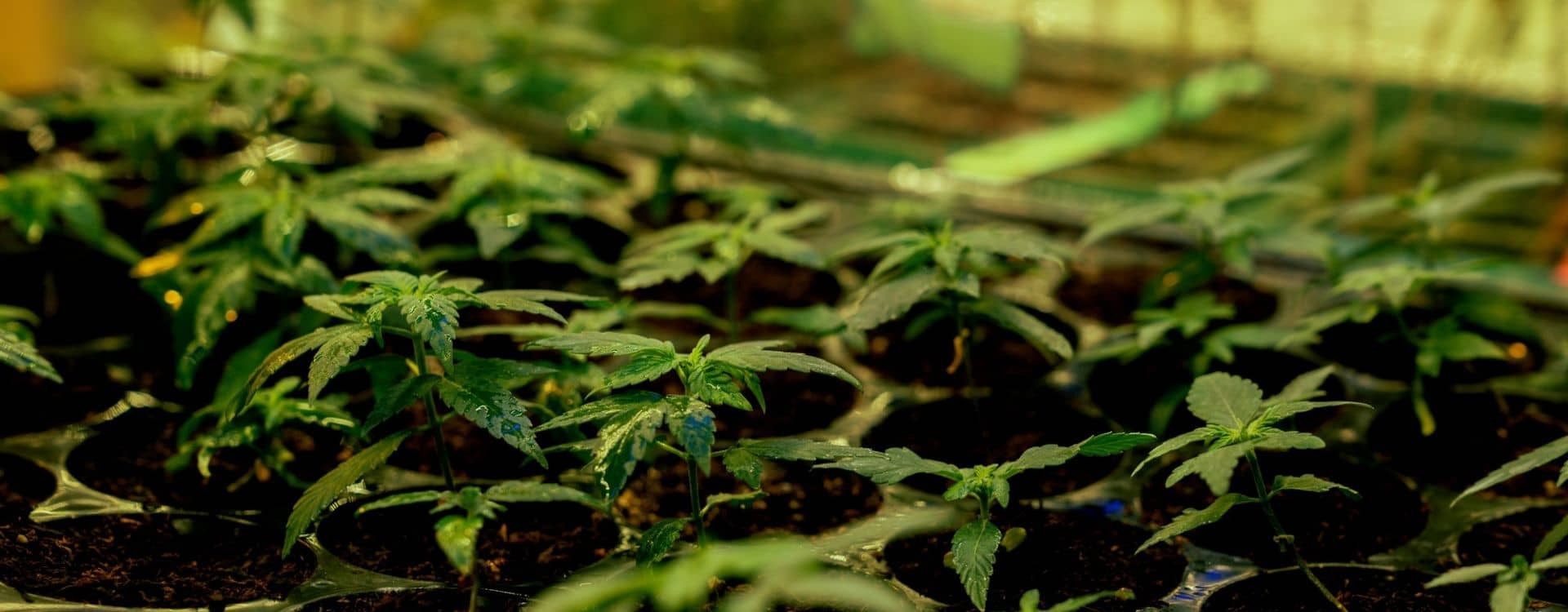
A healthy seedling has vibrant green leaves, a strong upright stem, and steady growth. Leaves should be symmetrical, firm, and free from spots or discoloration. Growth should be consistent, with new leaves forming regularly. As the plant develops, the stem will thicken enough to support future bud production.
Unhealthy seedlings may show pale or yellow leaves, weak stems, leaf curl, or slow growth. Wrinkled leaves can point to pH imbalances or nutrient deficiencies. Thin, weak stems often mean the light source is too far away. Dark, drooping leaves usually indicate overwatering, while dry, crispy edges can signal heat stress or low humidity.
By closely monitoring seedlings and responding to early warning signs, you can prevent issues from getting worse and set your plants up for a successful grow.
FAQs
How long does the seedling stage last?
The cannabis seedling stage typically lasts about two to three weeks, depending on the strain and growing conditions.
Why are my seedlings falling over?
This can be caused by stretching due to insufficient light, weak stems, or overwatering. Adequate lighting and gentle airflow help strengthen stems.
Can I use a humidity dome for cannabis seedlings?
Yes, but only for the first few days. Too much humidity over time can lead to mold growth and weak plants.
When should I start feeding my seedlings nutrients?
If you’re using pre-fertilized soil, wait until the third week before introducing mild nutrients. In hydroponic or coco setups, start with a diluted nutrient solution after the first true leaves appear.
How do I know if I’m overwatering my seedlings?
If you’re using pre-fertilized soil, wait until the third week before introducing mild nutrients. In hydroponic or coco setups, start with a diluted nutrient solution after the first true leaves appear.
Closing Thoughts on How To Care for Young Seedlings
Caring for young cannabis seedlings requires balancing proper lighting, temperature, humidity, and watering. Providing the right environment early on gives you the best chance of growing healthy plants and achieving solid yields.
Keep a close eye on your seedlings and adjust conditions as needed. When done correctly, you’ll have strong, healthy cannabis seedlings ready for the next stage of cultivation.